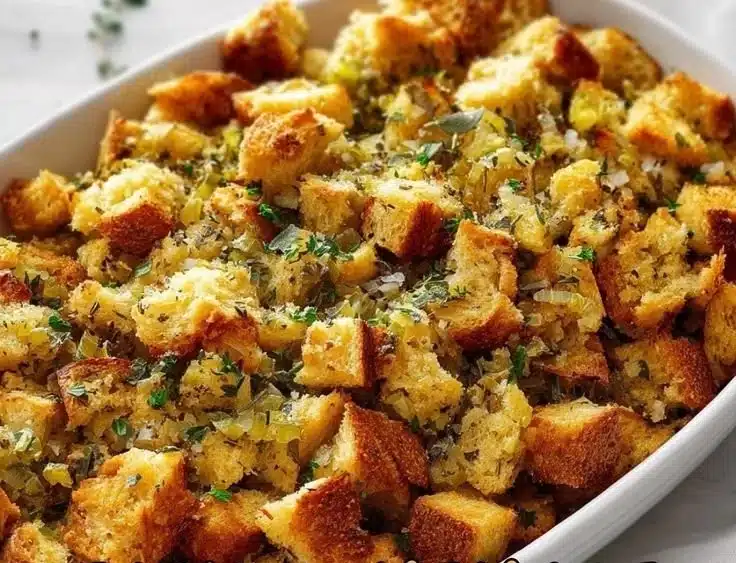


How to make Classic Bread Stuffing With Fresh Herbs
Making classic bread stuffing with fresh herbs is a delightful way to enhance your meals, especially during festive seasons or family gatherings. This recipe combines simple ingredients and straightforward steps, making it easy for anyone to prepare. With a beautiful blend of bread, fresh herbs, and savory vegetables, it’s no wonder that this dish becomes a favorite at the dinner table.
Ingredients
- 1 loaf of bread (about 1 pound), cubed
- 1/2 cup unsalted butter
- 1 onion, diced
- 2 celery stalks, diced
- 3-4 cloves garlic, minced
- 2 cups homemade or low-sodium chicken broth
- 1/2 teaspoon salt
- 1/2 teaspoon black pepper
- 1 tablespoon fresh parsley, chopped
- 1 tablespoon fresh thyme, chopped
- 1 tablespoon fresh sage, chopped
- 1 teaspoon dried rosemary
Directions
- Preheat the oven to 350°F (175°C).
- In a large skillet, melt the butter over medium heat.
- Add the onion, celery, and garlic, and sauté until softened, about 5 minutes.
- In a large bowl, combine the bread cubes, sautéed vegetables, herbs, salt, and pepper.
- Slowly pour the broth over the mixture, stirring gently until the bread is evenly moistened.
- Transfer the stuffing to a greased baking dish.
- Cover with foil and bake for 30 minutes.
- Remove the foil and bake for an additional 15-20 minutes or until the top is golden brown.
- Serve warm.
Why You’ll Love This Classic Bread Stuffing With Fresh Herbs
There are plenty of reasons to love this classic dish. First and foremost, it’s all about the flavor. The combination of fresh herbs like parsley, thyme, and sage adds a fragrant aroma and a fresh taste that elevates the dish. The sautéed vegetables provide a savory base that balances the richness of the butter. The result is a stuffing that is not only delicious but also warms your heart and home.
This stuffing is versatile too. It can be served as a side dish during holiday meals, alongside roasts or grilled meats, or even enjoyed on its own. It’s also a wonderful way to use up any leftover bread you might have lying around.
Nutriment Benefits
Classic bread stuffing is not just tasty; it also has some nutritional value, especially when made with fresh ingredients. Let’s take a look at what goes into this dish:
- Bread: Depending on the type of bread used (whole grain or sourdough), it can provide carbohydrates for energy and fiber for digestion.
- Vegetables: Onions, celery, and garlic add vitamins and minerals. They are low in calories while high in nutrients.
- Herbs: Fresh herbs like parsley, thyme, and sage offer antioxidants and essential oils that are beneficial for health.
- Butter: While butter adds richness and flavor, using unsalted butter allows you to control the amount of salt in the dish.
What to Serve With Classic Bread Stuffing With Fresh Herbs
This stuffing pairs well with various main dishes, making it a fantastic side for holiday feasts or family dinners. Here are some suggestions:
- Roast Turkey: A classic pairing during Thanksgiving, the moist turkey and savory stuffing go hand in hand.
- Chicken: Baked or roasted chicken with crispy skin complements the soft, savory stuffing perfectly.
- Pork Roast: The sweetness of the pork balances well with the herb-infused flavors of the stuffing.
- Vegetarian Dishes: For a vegetarian meal, serve the stuffing alongside roasted vegetables or a hearty salad.
How to Store Classic Bread Stuffing With Fresh Herbs
To keep your stuffing fresh, it’s essential to store it properly. Here are some tips for storage:
- Refrigeration: If you have leftover stuffing, let it cool down to room temperature. Then, transfer it to an airtight container and store it in the refrigerator. It can last up to 3-4 days.
- Freezing: For longer storage, you can freeze the stuffing. Place it in a freezer-safe container or bag, and it can be stored for up to 2-3 months. When ready to use, thaw it in the refrigerator overnight before reheating.
Tips and Mistakes to Avoid
When making classic bread stuffing, a few tips and common pitfalls can help ensure your dish turns out perfectly:
- Choose the Right Bread: A day or two old bread works best since it’s slightly stale and absorbs moisture better. Avoid fresh bread, as it can become soggy.
- Don’t Overwhelm the Mixture: Ensure the broth is added gradually so that the bread absorbs just the right amount without becoming mushy.
- Season Well: Remember to taste your mixture before baking. Adjust seasoning as needed, especially if you are using low-sodium broth.
Variation
While the classic recipe is wonderful on its own, feel free to experiment with different ingredients or flavors. Here are a few variations:
- Add Fruits: Incorporate dried cranberries or apples for a hint of sweetness.
- Nuts: Chopped pecans or walnuts can add a delightful crunch and nutty flavor.
- Sausage: For a heartier stuffing, add cooked sausage. Just sauté it with the vegetables for an added savory touch.
- Vegan Option: Substitute butter with olive oil and use vegetable broth instead of chicken broth for a vegan-friendly version.
FAQs
1. Can I prepare stuffing ahead of time?
Yes! You can prepare the stuffing mixture a day ahead, store it in the refrigerator, and bake it just before serving.
2. How do I reheat leftover stuffing?
To reheat, place the stuffing in an oven-safe dish, cover it with foil, and heat it at 350°F (175°C) for about 20-25 minutes, or until heated through. You can add a splash of broth if it seems dry.
3. Can I use gluten-free bread for this stuffing?
Absolutely! Gluten-free bread works well in this recipe. Just be sure to check the texture and absorbency, as it can differ from regular bread.
Classic bread stuffing with fresh herbs is a timeless dish that brings joy to any table. With its amazing flavor and versatility, it’s a worthy addition to your recipe collection. Whether you choose to stick with the classic method or make some variations of your own, this dish is sure to delight everyone who tries it. Enjoy!